Jigsaw, chess, puzzle box or maze — the puzzle you reach for
「If these puzzles were set before you, which would you instinctively reach for?」
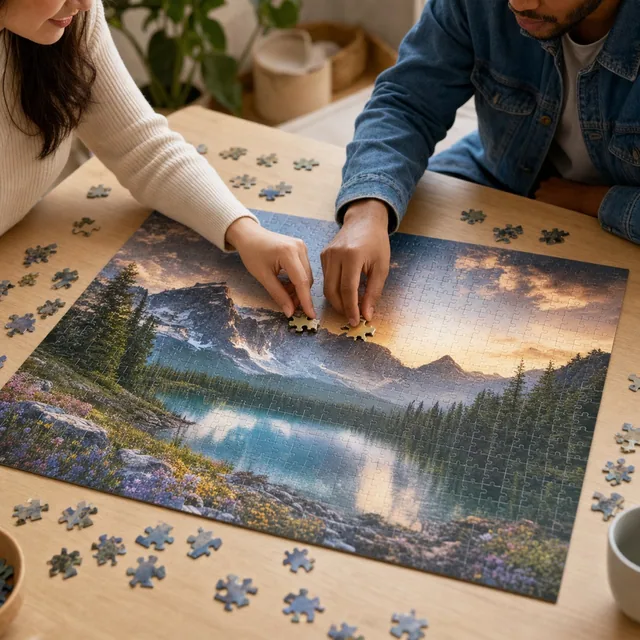
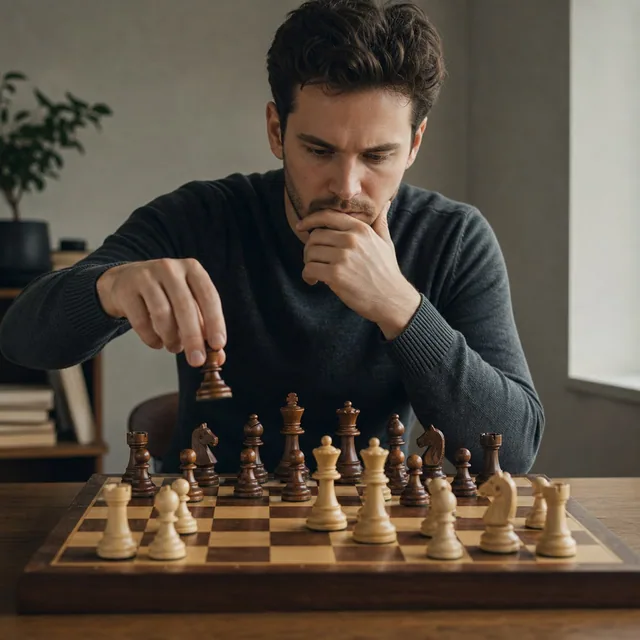
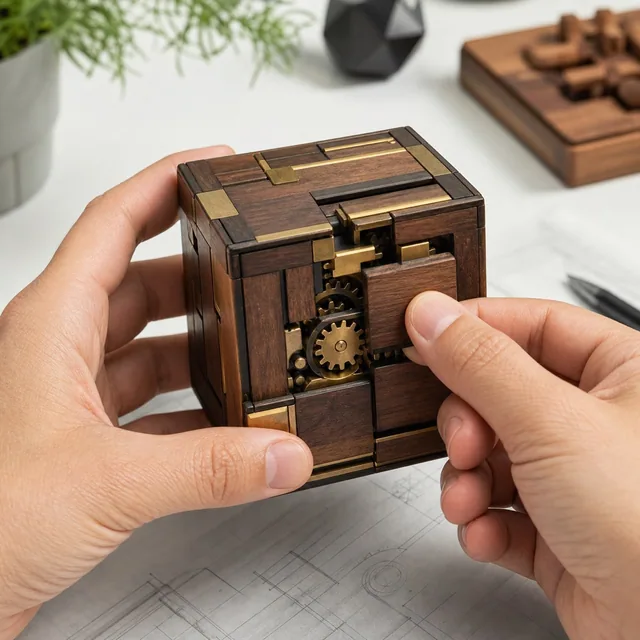
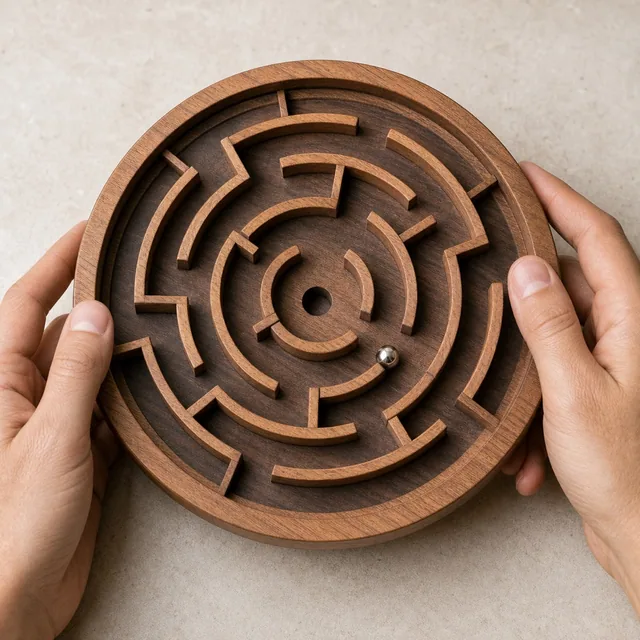
Four puzzles are laid out on the table: a jigsaw you'd finish with someone, a chess position where you find the next move, a puzzle box with hidden mechanisms, and a wooden maze where you tilt a ball through. No rules, no explanation — which one do you instinctively reach for? The way you like to think shows in the way you like to play.
The four options and who picks them
Side by side
Cacioppo and Petty measured how much people enjoy thinking for its own sake as 'need for cognition' and showed it varies widely (Journal of Personality and Social Psychology, 1982, doi:10.1037/0022-3514.42.1.116). But 'liking to think' comes in flavours. These four options separate them: assembling a big picture together (jigsaw), reading ahead with logic (chess), probing a hidden mechanism (puzzle box), and finishing through dexterity and focus (maze). Every one has a right answer; what's fun is how differently people get there. Jigsaw people remember the time spent finishing together more than the finished picture; splitting the work feels natural, and alone they lose interest halfway. Chess is the game of someone who stares at the board and branches possibilities in their head — the longer the silence, the deeper the focus. The puzzle box goes to the person who burns brighter without instructions, armed with the curiosity to keep poking because 'there must be a trick somewhere'. The wooden maze is chosen by those who learn through their hands rather than their thoughts, and who like that a failed run can be restarted in a second.
Same pick vs. different pick
Same puzzle, and on a lazy weekend you'll both reach for the same thing — buy two to keep the peace. Jigsaw plus chess is 'let's do it together' versus 'hold on, I'm thinking', a comfortable arrangement of playing separately side by side and occasionally peeking over. Puzzle box plus maze are both hands-on tinkerers, a cheerful pair whose 'let me try' and 'not yet' exchange never ends.
FAQ
I'm not good at puzzles.
Skill doesn't matter. Choose the one you'd find yourself fiddling with. Which one is fun even when you can't solve it — that's what reveals how you like to think.
Can I pick chess without knowing the rules?
Yes. If the board draws you toward 'time to think slowly', that's enough. We're reading whether you'd want to sit in that scene, not whether you know how the knight moves.